

Phytoestrogens are natural substances found in foods of plant origin and in their chemical structure resemble the female hormone estrogen. Because they are similar to it, they have the ability to bind to the same receptors in the body, although they do so much weaker than the estrogen that the body itself produces.
Phytoestrogens: What types are there and what abilities do they have?
During menopause, estrogen levels naturally decline, so it is thought that foods rich in phytoestrogens can mitigate this loss to some extent. They are not enough to replace estrogen when menopause occurs, but they can help during the hormonal fluctuations that accompany it.
There are two main types of phytoestrogens: isoflavones (mostly found in soy) and lignans (in many foods, such as flaxseeds, whole grains, legumes, fruits and vegetables).
Potential health benefits of phytoestrogens
1. Relief of hot flashes
Phytoestrogens can help reduce unpleasant hot flashes. An earlier study showed that they reduce the frequency of hot flashes without serious side effects, and several meta-analyses have reached a similar conclusion.
2. Supporting bone health
The drop in estrogen levels during and after menopause has a negative effect on bones and increases the risk of osteoporosis. Phytoestrogens have been studied as a mild, natural alternative to hormone therapy. Research indicates a possible benefit, but also that phytoestrogens should not be used as the only form of osteoporosis prevention.
3. Alleviation of menstrual disorders
During the phases of the cycle when estrogen declines, many women experience a drop in energy and mood swings. Foods rich in phytoestrogens may partially help balance hormones, although more research is needed.
4. Help with acne
Hormonal acne often results in an increase in the level of androgens (male hormones). Phytoestrogens could potentially alleviate the problem, but here again more evidence from relevant research is needed.
5. Heart health
Some studies suggest that phytoestrogens may help maintain blood vessel health and reduce the risk of atherosclerosis, especially in postmenopausal women.
Phytoestrogens from soy and cancer risk
This topic has been studied a lot, especially in relation to breast cancer. According to the World Cancer Research Fund (WCRF):
So far, there is insufficient evidence that isoflavones reduce or increase the risk of breast cancer in women before or after menopause. Some research suggests that a diet rich in isoflavones may reduce the risk of lung cancer in nonsmokers, but the evidence is insufficient to make recommendations.
In women who have already had breast cancer, it has been observed that those who eat more soy may have a slightly lower risk of death, but these claims are still considered preliminary.
Overall, the available data suggest that soy probably does not increase the risk of cancer, and may even protect against certain types of malignancy. Therefore, the Austrian Cancer Council recommends that people who already eat soy, including women who have had breast cancer, are free to continue their consumption.
Natural sources of phytoestrogens
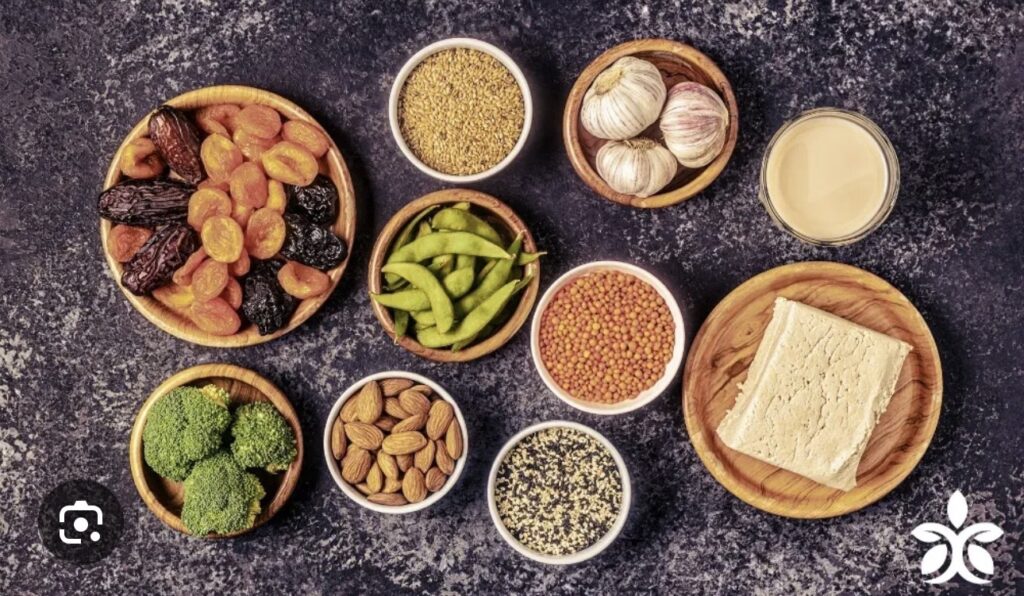
Phytoestrogens are naturally found in many plant foods, and the richest sources are:
– soy products: tofu, miso, tempeh, soy, drinks made from whole soy beans
– grains: oats, rice, barley, quinoa, rye, wheat germ
– seeds and nuts: flax, sesame, sunflower, almonds, pistachios
– legumes: lentils, chickpeas, beans, peas.
To increase the intake of phytoestrogens, it is enough to eat more plant foods. It is recommended that you avoid highly processed soy products and soy-based supplements, as they are absorbed differently in the body than natural soy.